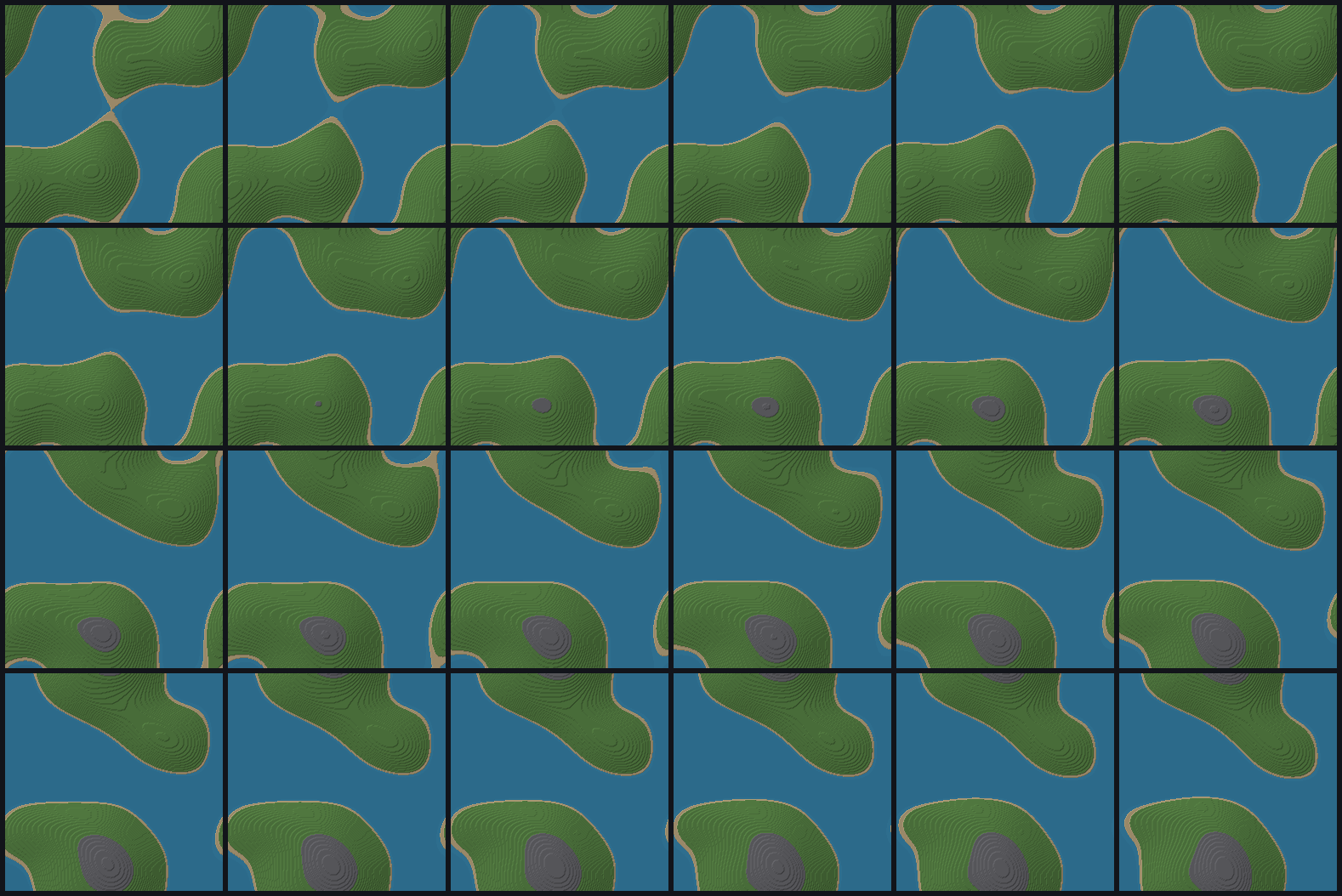
step 0 of 240
Every terrain world as a whole region, 4,096 columns by 512 lanes, drawn as a hillshaded relief map by sitoolz.gpu's Taichi kernels: the same laws as
terrain.window, every cell its own thread, checked cell for cell against the Python (gpu.check_world) and drawn in a fraction of a second where the Python
takes minutes. Light from the north-west, the six classes of terrain.colour (water, sand, grass, forest, rock, snow), the rivers cut where the world has them,
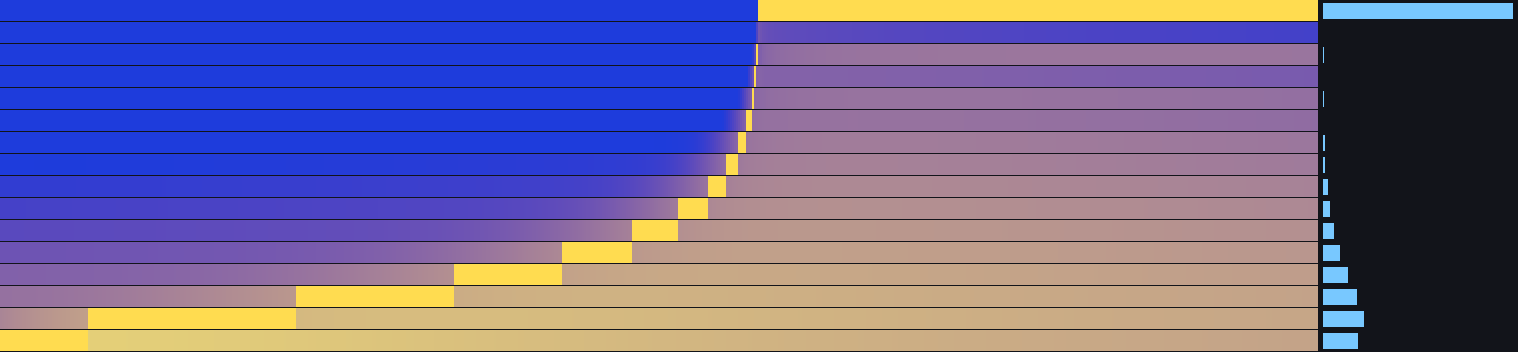
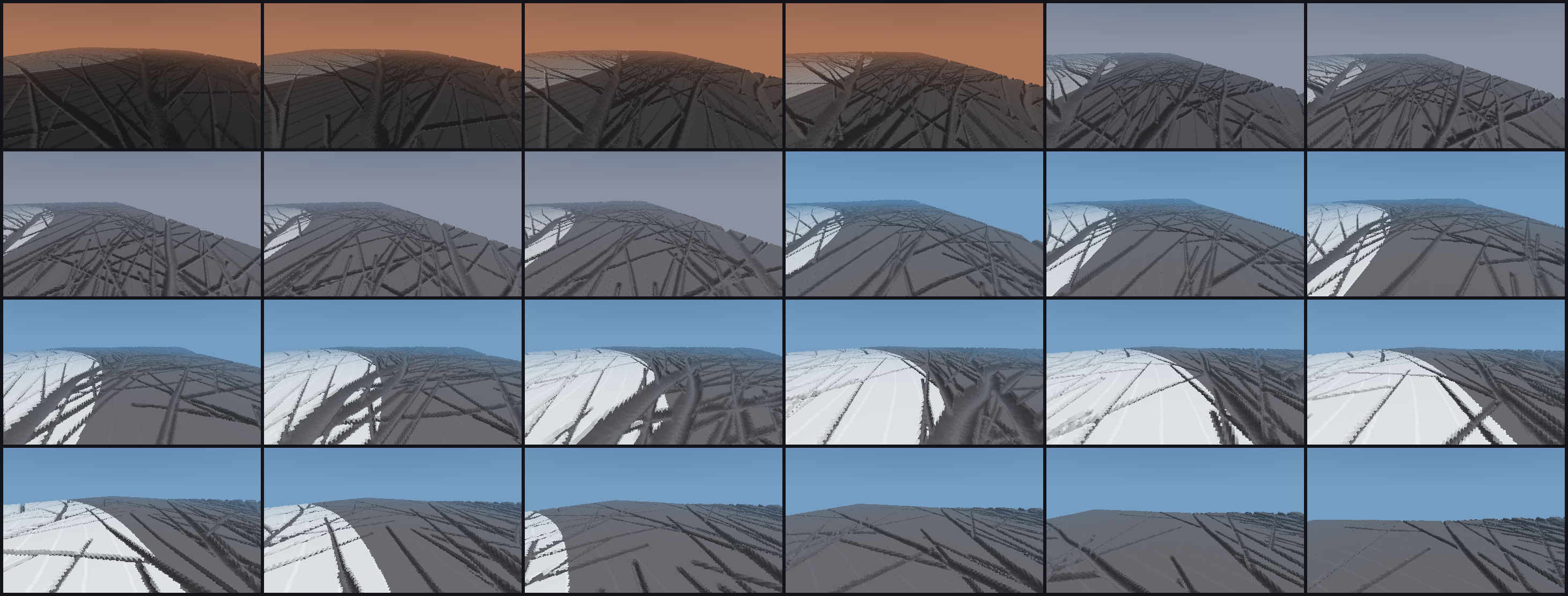
the light cone's walls stood. Below it, the Vortex Sea alive (flow2z's step as a kernel, 240 frames from one seed), dyadicz's cascade over time, and a flyover of the
Ruler Alps rendered by a ray-marching kernel with the Sundial hour for light. Everything here was written by tools/atlas.py; nothing is drawn in the browser.
Lars Rocha's laws (RangeBlends3D's kernels, flow2z, dyadicz, the drone); this page only shows them.
Each map shows lanes −256 to 255 across columns 0 to 4,095 of region 0 (the same region Wander opens). Scroll a strip sideways for the cell-for-cell view, or fit it to the page. The times are the kernels' on this machine's CPU backend (the law, then the whole window with the rivers and the finish), after the first call compiled them.
| world | law | law ms | window ms | relief ms | highest | water | png |
|---|